Most insulation problems in the Santa Clarita Valley come from a handful of causes: brutal summer heat, settling over the years, rodents, and contractors who disturb the attic and leave it that way. Here's what we find most often, how serious each one is and how we fix it.
Hot Upstairs Rooms and Overworked AC
Serious
In a two-story home, the upstairs runs 10°F or more hotter than the downstairs on summer afternoons. Bedrooms stay warm into the night, and the AC runs nearly nonstop without ever catching up. This is the complaint we hear most from Valencia homeowners.
Why it happens here: Valencia attics routinely pass 140°F during heat waves, and most local homes have their ductwork running through that attic. When ceiling insulation has settled below R-19 and the ducts leak, upstairs rooms take the heat from both directions. Commuter households make it worse because the house heat-soaks all day with the thermostat set back, and then the AC has to fight that stored heat during SCE's 4–9 pm peak pricing window. Two-story tract homes take it hardest because the upstairs ceiling sits right under the roof deck.
Signs
- Upstairs is 8–15°F warmer than downstairs
- Ceilings feel warm to the touch on summer afternoons
- AC runs constantly but never reaches the set temperature
- Summer SCE bills spike during peak-rate hours
- Bedrooms stay hot until midnight or later
- Supply vents upstairs blow weak or lukewarm air
Local patterns: We see this all over the two-story homes in Valencia Summit, Northpark and Northbridge, and in the large floor plans in Bridgeport and Westridge. It peaks from July through September, and the calls start coming in right after the first 100°F week.
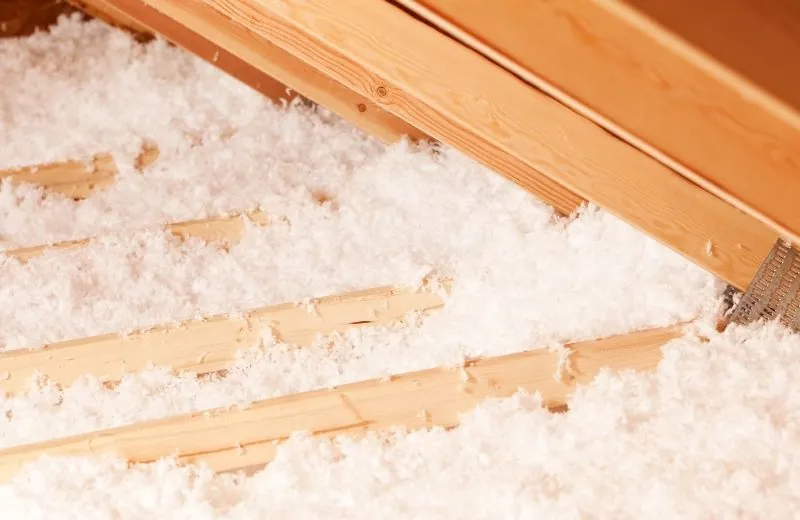
Our fix: First we air-seal the attic floor. Then we blow in insulation to the R-38 to R-49 range, and we can seal or insulate the attic ducts where needed so cooled air actually reaches the upstairs rooms.
Rodent-Contaminated Insulation
Serious
Roof rats and mice tunnel through attic insulation, pack it down and nest in it, leaving droppings and urine behind. Contaminated insulation loses most of its R-value, can bring odors and allergens into the house and gives future pests an easy place to nest.
Why it happens here: Roof rats do well in Santa Clarita's mature landscaping, fruit trees and the greenbelts along the paseos. They get into attics through gaps at roof tiles, vents and utility openings, and once they're in, the warm, dry insulation is ideal nesting material. Valencia attics are so dry that droppings and debris just pile up instead of breaking down. A simple top-off would bury the contamination, so a proper fix means removing the old material, sanitizing and closing the entry points.
Signs
- Scratching or scurrying overhead at night
- Droppings in the attic or garage
- Tunnels and flattened trails through the insulation
- Musty or ammonia-like smell upstairs
- Chewed wiring, duct wrap or vent screens
- Nesting material near the eaves
Local patterns: This is common in older tracts near mature trees and the paseos, like Old Orchard, Valencia Glen and Valencia Meadows, and in Newhall and Saugus homes near open hillsides. Activity usually goes up as nights cool off in fall and winter.
Our fix: We vacuum out the contaminated insulation, sanitize the attic, seal the rodent entry points we find and then install new, clean insulation at current R-values.
Settled and Thinned Original Insulation
Moderate
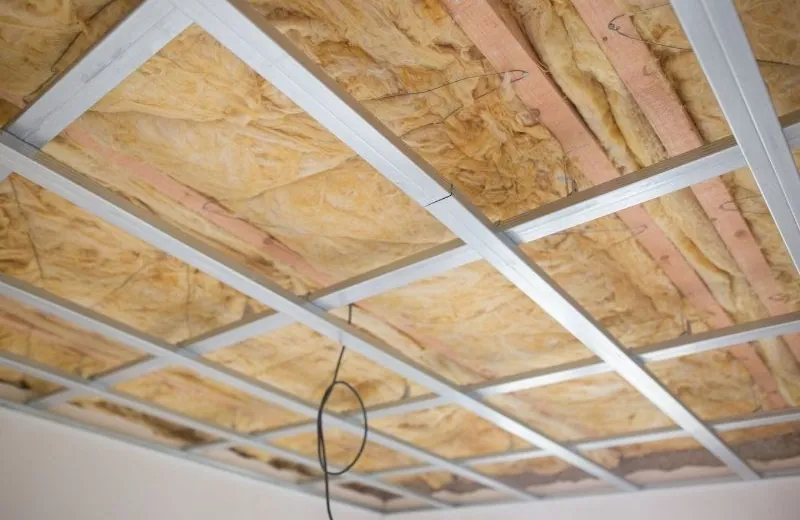
Over decades, fiberglass batts and loose fill compress, shift and thin out. An attic that started at R-19 may be performing around R-11 now, with bare spots near the eaves and around the hatch. That's far below today's Climate Zone 9 expectations.
Why it happens here: Valencia's first homes went up in the 1960s and 1970s, when ceiling insulation requirements were a fraction of today's. Years of extreme heat, dry air and foot traffic from service techs have compressed whatever was installed. Since there's little moisture here to cause visible damage, many homeowners never look in the attic and assume the insulation is fine. Usually it's half the depth it should be, and most homes in these neighborhoods would benefit from an upgrade to R-38 or higher.
Signs
- Insulation is level with or below the ceiling joists
- Bare drywall visible in spots
- Batts are gray, flattened or brittle
- Uneven temperatures room to room
- House cools down slowly in summer and loses heat fast in winter
- Higher bills than similar homes nearby
Local patterns: This is typical in Valencia Hills, Old Orchard, Valencia Meadows and Valencia Glen, which date to the 1960s–70s, and in many 1980s homes across Saugus and Canyon Country. These original attics have usually never been touched.
Our fix: We air-seal the bypasses, then blow in fresh fiberglass or cellulose over the existing layer, or remove it first if it's damaged, to reach the R-38 to R-49 range.
Insulation Disturbed by Solar, HVAC and Cable Work
Moderate
Solar installers, HVAC crews and cable techs walk through attics, pull insulation aside to run lines and rarely put it back. That leaves bare patches, crushed paths and open gaps around new penetrations, which wipes out much of the attic's thermal performance.
Why it happens here: Rooftop solar is everywhere in Valencia, and the long cooling season means AC systems get replaced every 15–20 years. Every one of those projects sends someone across the attic. Many 1990s homes also had attic repairs after the 1994 Northridge earthquake that left the insulation patchy. Newer homes in Bridgeport and FivePoint communities aren't immune either. A single solar install can leave whole sections of a code-level attic uncovered.
Signs
- Visible paths or trenches through the insulation
- Bare spots near new conduit or ductwork
- Insulation piled in mounds around the hatch
- A room that got hotter after solar or AC work
- Gaps around new roof or wall penetrations
Local patterns: We find this in solar-equipped homes across Northbridge, Bridgeport, Westridge and Tesoro del Valle, and in 1990s Valencia Summit and Northpark attics after AC replacements. It usually turns up a season after the work was done.
Our fix: We seal the new penetrations, level out the existing material and blow in insulation to restore an even, full-depth layer across the whole attic.
Bonus Rooms and Bedrooms Over Hot Garages
Moderate
Living space above an attached garage loses heat in winter and picks it up in summer through the garage ceiling and the knee walls. The bonus room ends up as the hottest, coldest and least-used room in the house.
Why it happens here: Attached garages are standard in Valencia, and newer floor plans often put a bonus room or bedroom right over them. On summer afternoons, an unconditioned garage with a west-facing door can easily reach 110°F or more. With thin floor insulation or gaps where the joists meet, that heat moves straight up. Vaulted ceilings and knee walls above add even more exposure to attic heat.
Signs
- Floor feels warm in summer and cold in winter
- Room is noticeably hotter than the rest of the upstairs
- Car exhaust or garage smells in the room
- Drafts along the baseboards
- AC vent can't keep the room comfortable
Local patterns: This is very common in the larger 2000s-and-newer homes in Bridgeport, Westridge, Northbridge, Tesoro del Valle and Copper Hill, along with many Stevenson Ranch floor plans that have bonus rooms.
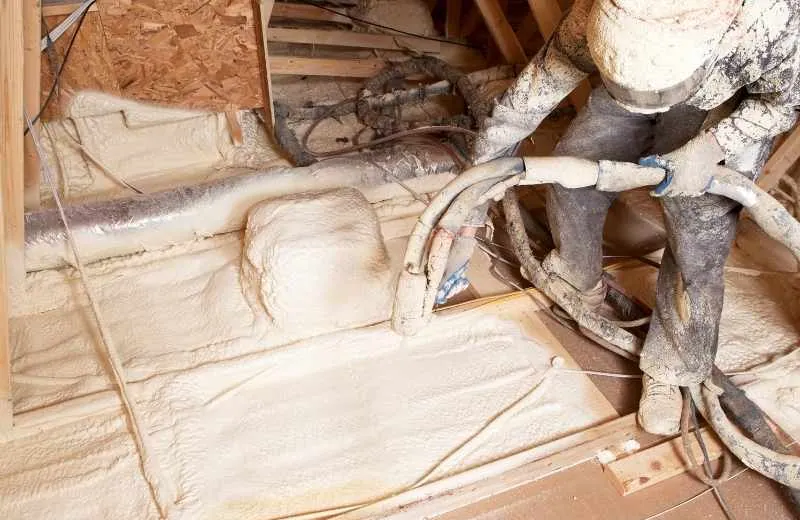
Our fix: Closed-cell or open-cell spray foam on the garage ceiling and knee walls, or dense-pack insulation in the floor cavities, plus air sealing at the rim joists.
Smoke and Dust Entry Through Attic Leaks
Emergency
Unsealed can lights, top plates, plumbing chases and attic hatches let air move between the attic and your living space. During Santa Ana wind events and wildfires, that air carries fine dust, smoke and ash into the house.
Why it happens here: Santa Clarita is ringed by fire-prone hills, and the valley has lived through the Tick, Sand and 2003-era fires. Santa Ana winds push smoke and dust right through attic vents, and leaky ceilings pull it into the house. In Very High Fire Hazard Severity Zones, old non-rated vents also let embers into the attic, where combustible materials can catch.
Signs
- Dust lines on carpet edges or around ceiling fixtures
- Smoke smell indoors during fire events
- Black streaks on insulation around can lights
- Drafts from recessed lights or the attic hatch
- Allergies flare during Santa Ana winds
Local patterns: This hits hillside-edge homes in Valencia Hills, Tesoro del Valle, Castaic and Canyon Country the hardest. It shows up most from September through January, when Santa Anas and fire season overlap.
Our fix: We do a full attic air-seal and use noncombustible insulation. We can also coordinate ember-resistant vent upgrades that meet Chapter 7A in fire-hazard zones.
Uninsulated Exterior Walls
Minor
Many older stucco homes were built with little or no insulation in the exterior walls. Even with a well-insulated attic, the walls keep radiating afternoon heat into the house long after sunset.
Why it happens here: Valencia's 1960s and early-1970s tracts went up before California had meaningful energy codes. Paired with single-pane aluminum windows, uninsulated stucco walls on west and south faces soak up the strong valley sun all afternoon. On frosty winter nights they leak heat back out, so gas bills go up too.
Signs
- Exterior walls feel warm inside on summer evenings
- Walls feel cold in winter
- Rooms on the west side are hardest to cool
- An outlet cover removed shows no insulation
- Big swings between day and night indoor temperatures
Local patterns: This is mostly a first-phase problem, in Valencia Hills, Old Orchard, Valencia Meadows and older parts of Newhall. It often comes up during kitchen or bath remodels when the walls are open.
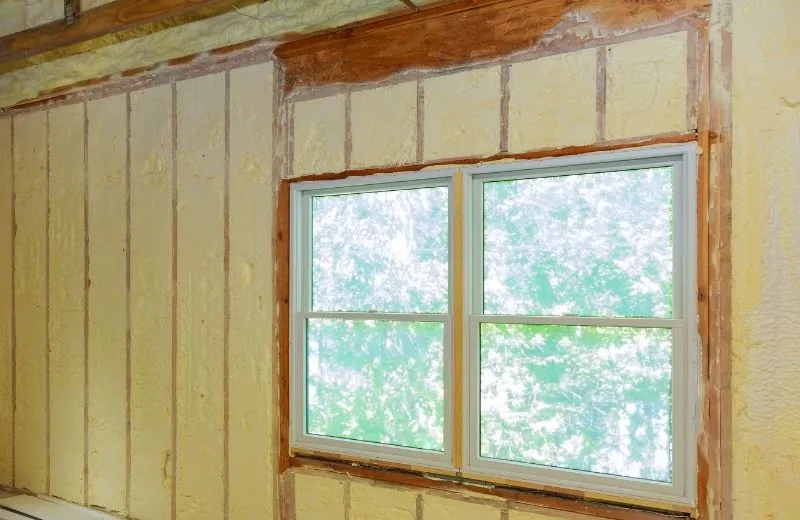
Our fix: Drill-and-fill blown insulation through small exterior or interior holes, or batts and spray foam installed during remodels when the wall cavities are open.